Journal entries for inventory transactions
inventory journal entry example

Accurate inventory records can help businesses to make informed decisions, improve financial performance, and comply with tax reporting requirements. Compare the physical inventory counts with the recorded inventory levels in the accounting system. Calculate the total value of the discrepancies to determine the necessary adjustments. These records include invoices, receipts, and any other documentation related to inventory purchases. Purchase records help verify the inventory acquired during the period and ensure that all purchases are accurately recorded in the accounting system. Inventory is a key component of a company’s current assets on the balance sheet.

  • Inventory management is one of the essential aspects of business management.
  • When an item is ready to be sold, transfer it from Finished Goods Inventory to Cost of Goods Sold to shift it from inventory to expenses.
  • This method smooths out price fluctuations over the accounting period by averaging the cost of beginning inventory and purchases.
  • By following these best practices and tips, businesses can maintain accurate inventory records, improve operational efficiency, and enhance financial performance.

Accounting for Inventory (Purchase, Journal Entries, Example, and More)

These adjustments help in presenting a true picture of the company’s financial health and operational efficiency. This article has outlined the essential steps for making adjusting journal entries for inventory accounts. These steps include gathering necessary information, calculating adjustments, preparing the journal entry, and reviewing and approving adjustments. Detailed examples have been provided for common scenarios such as adjusting for physical inventory counts, inventory shrinkage, obsolete inventory, and consignment inventory.

Best Practices for Recording Journal Entries

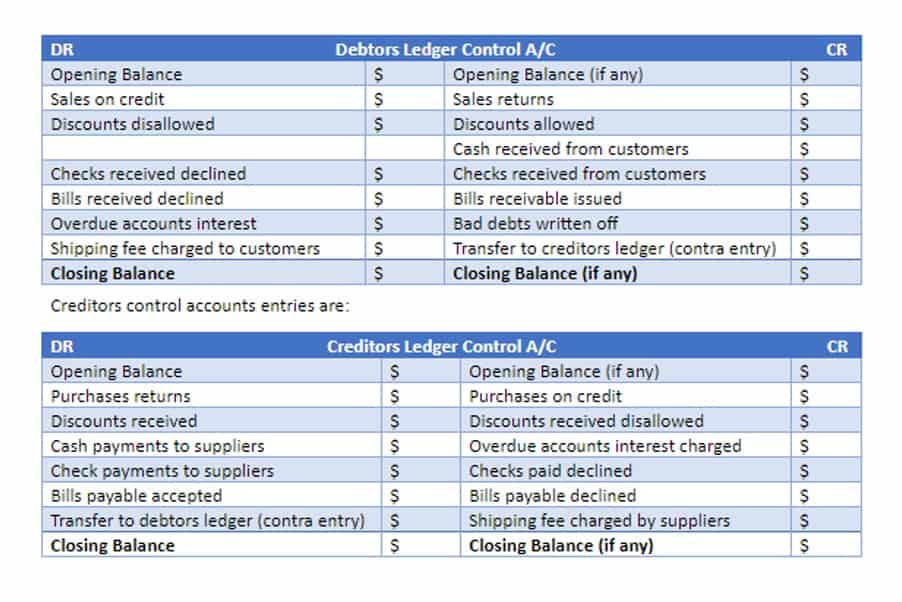
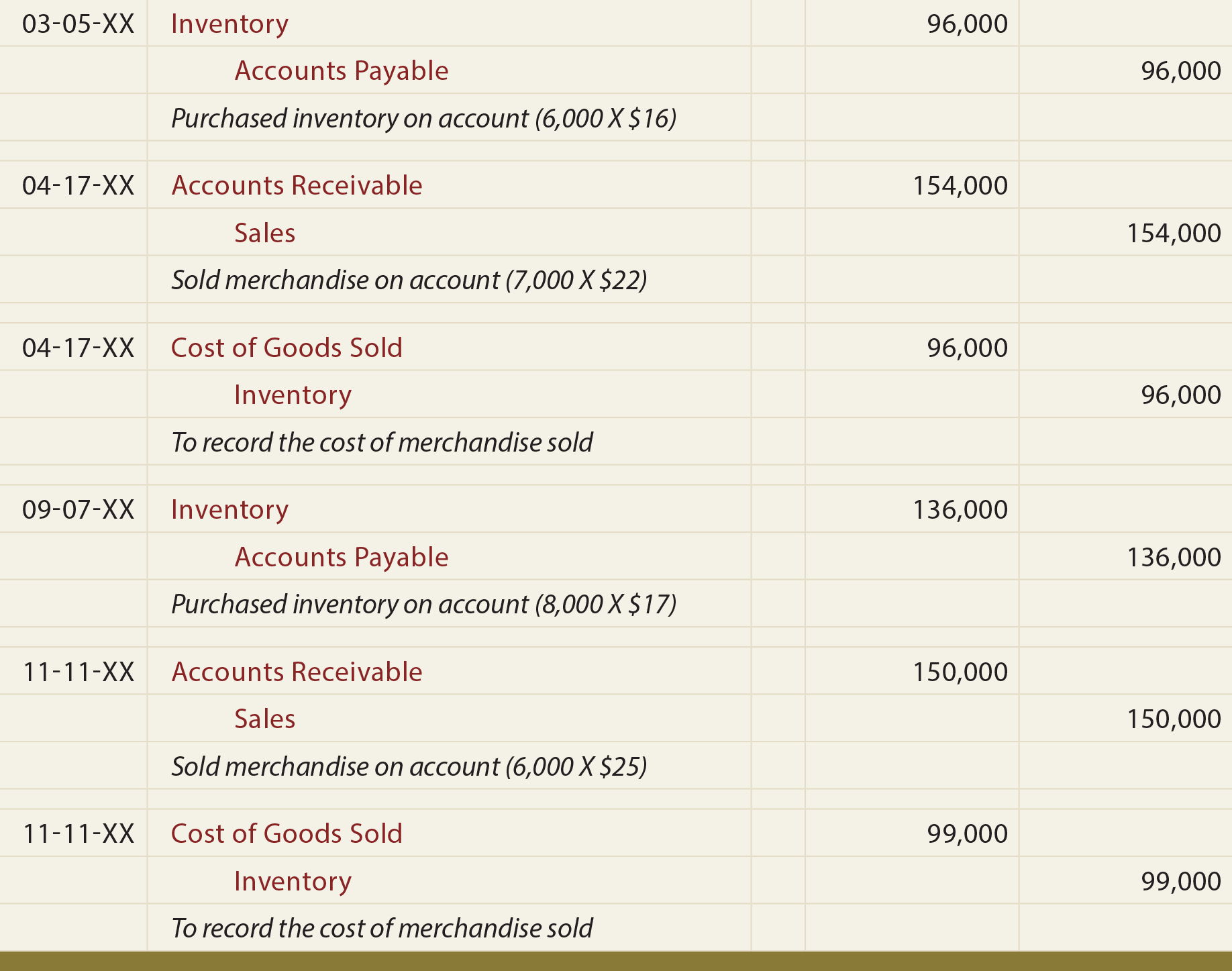
Debiting the Inventory account increases Garden Supplies Co.’s assets, as it adds value to the company’s stock. Crediting the Accounts Payable account increases the company’s liabilities, showing that the purchase will be paid for at a later date, not immediately impacting the company’s cash flow. An inventory write-down and write-off are two common accounting adjustments to inventory that reduce the carrying value of inventory on the balance sheet. But while the circumstances for both share commonalities, one particular distinction must be understood. Under U.S. GAAP accounting standards (FASB), the lower of cost or market (LCM) rule is used to value inventories. The LCM rule states that the inventory carrying balance recorded must reflect the lesser value of the original cost or current market value.

Is the purchase of inventory always recorded as an increase in assets?

By relying on digital technologies, perpetual inventory systems reduce the need to physically count a company’s inventory. Both merchandising and manufacturing companies can benefit from perpetual inventory system. When inventory is purchased on credit, the Inventory account on the balance sheet increases, reflecting more assets, and the Accounts Payable account also increases, indicating a rise in liabilities.
inventory journal entry example

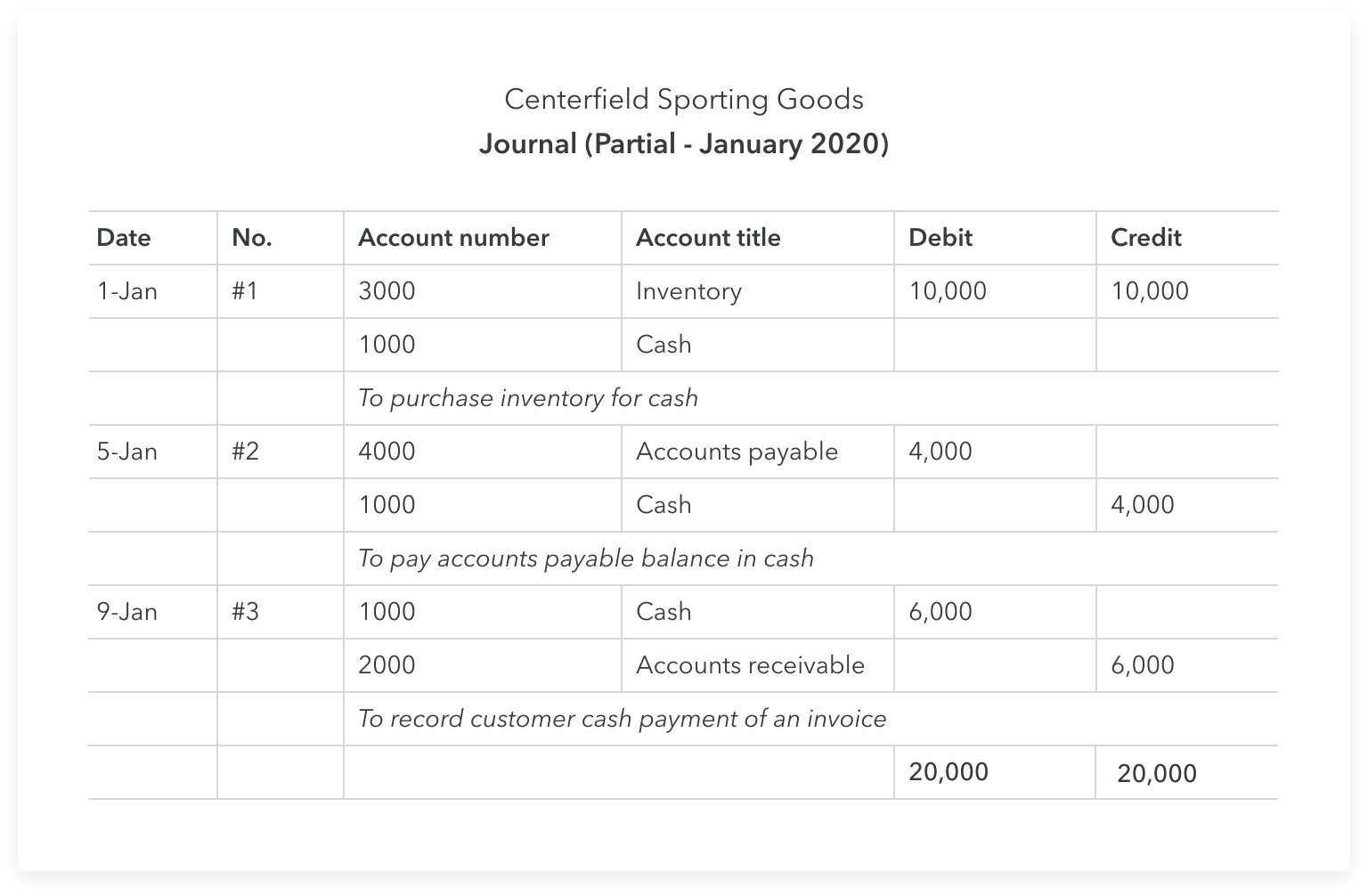
The raw materials entry also accounts for the movement of raw materials within your warehouse, allowing you to track when your production materials are moved from storage into production. The lower-of-cost rule states that a business inventory accounting journal entry must record inventory at the lower of cost. Undertake a physical inventory count at the end of the accounting period to determine the exact quantities of inventory on hand.

Debit your Raw Materials Inventory account to show an increase in inventory. Your business’s inventory includes raw materials used to create finished products, items in the production process, and finished goods. There are key differences between perpetual inventory systems and periodic inventory systems. The journal entries used when bookkeeping in the perpetual inventory system are different compared to the ones used in a periodic system. Accountants don’t have to constantly adjust the changes in inventory levels since everything is done by the computing system (for the most part). For example, optical scanners are used in markets to keep track of inventory quantities, but at the end of the accounting period, a physical inventory is performed.

However, the company already record inventory write down $ 5,000 for the whole inventory, which already impacts income statement. So this actual damage will not impact income statement but the inventory reserve. Although there is an increase in accounts payable or cash out here, the cost has not occurred yet. By following these steps, you can create an accurate inventory journal entry to reflect the transaction and maintain accurate accounting records. The Weighted Average Cost method calculates an average cost for all inventory items available during the period.

With periodic inventory, you update your accounts at the end of your accounting period (e.g., monthly, quarterly, etc.). A perpetual inventory system keeps continual track of your inventory balances. Not to mention, purchases and returns are immediately recorded in your inventory accounts. tax returns By meticulously recording inventory purchases, a business can maintain accurate financial records, essential for analyzing its financial health, making informed decisions, and reporting to stakeholders. Inventory purchases represent the acquisition of goods that a business intends to sell.

Read more

T Account What Is It, Examples, Format, Related Terminologies

t account example

This feature allows you to focus on specific dimensions and gain insightful knowledge regarding the financial health of your business. Let’s check out some practical examples to put all of these accounting principles and T account rules into action. One of the fundamental principles of financial accounting is the T account. Shaun Conrad is a Certified Public Accountant and CPA exam expert with a passion for teaching. After almost a decade of experience in public accounting, he created MyAccountingCourse.com to help people learn accounting & finance, pass the CPA exam, and start their career.

T-Account vs Trial Balance

I will use my coffee shop to represent a business throughout these examples. A T-account is a visual way of displaying a set of financial records that use double-entry bookkeeping. It is called a T-account because of the structural way that the report looks like T. When you’re running your own business, you probably don’t have a ton of spare time to journalize transactions and write down T accounts into the ledger by hand. To create and record a T account, you have to know how debit and credit rules apply to the different types of accounts.

I have no examples of older male nannies

After a few days of receiving the invoice for the rent, i.e., on April 7th, 2019, Mr. X makes the same payment. A temporary account used in the periodic inventory system to record the purchases of merchandise for resale. (Purchases of equipment or supplies are not recorded in the purchases account.) This account reports the gross amount of purchases of merchandise. Net purchases is the amount of purchases minus purchases returns, purchases allowances, and purchases discounts.

Why Do Accountants Use T Accounts?

t account example

Accounts payable is a liability account, keeping track of bills I still have to pay in future. The ingredients for the cup of coffee are recorded as inventory (asset account). My inventory is reduced each time I sell a coffee so I need to credit the inventory account by 50p, reducing its value. This transaction will increase ABC’s philadelphia eagles beat new orleans saints nfl is mediocre playoffs for the birds Cash account by $10,000, and its liability of the Notes Payable account will also increase by $10,000. The T account balance must be debited to increase the Cash account, since it is an asset account. On the other hand, t the account must be credited o increase ABC’s Notes Payable account, since it is a liability account.

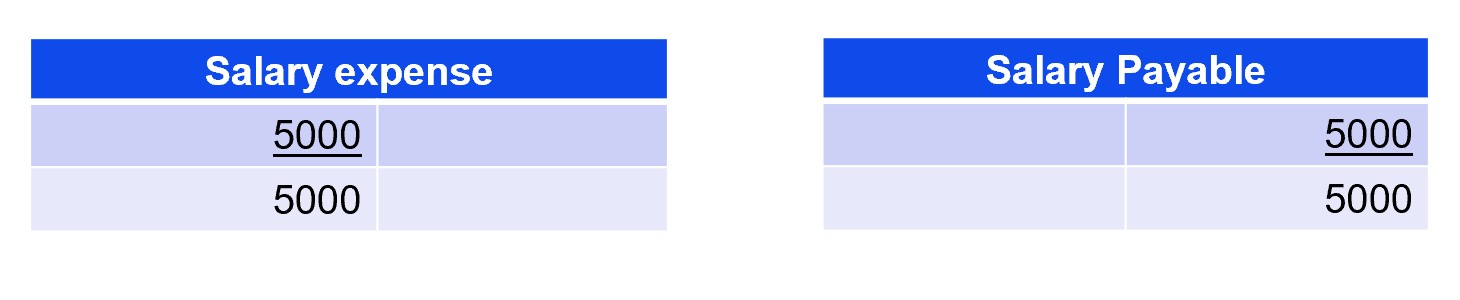
Wages to employees are a business expense and decrease owner’s equity, so the Wages Expense account will be debited for $3,200. Each T account carries the debit and credit entries for a different type of account, such as accounts receivable, cash, sales revenue, and so on. First, these debit and credit entries are posted into the journal, as a journal entry. The main thing you need to know about debit and credit entries is that they are the equal and opposite sides of a financial transaction. They’re simply words representing where cash is coming from, and where it’s flowing to, within a business.

Comprehensive Guide to Inventory Accounting

  • The T account balance must be debited to increase the Cash account, since it is an asset account.
  • This means that accounts with debit balances like assets will always increase when another debit is added to the account.
  • Each general ledger account will have its own T account, including asset accounts, liabilities, equity, income and expenses.
  • The grand total balance for each “T” account appears at the bottom of the account.

As I stated before, some accounts will have multiple transactions, so it’s important to have a place number each transaction amount in the debit and credit columns. It is beneficial if you are looking to complete a journal transaction and see how it will affect the general ledger accounts. The T account is so called because its outline is T shaped, with debits going on the left hand side, and credits going on the right hand side.

Most companies have computerized accounting systems that update ledger accounts as soon as the journal entries are input into the accounting software. Just like journalizing, posting entries is done throughout each accounting period. A T-Account is a visual presentation of the journal entries recorded in a general ledger account.

One of these accounts is always debited, while the other always credited. T Accounts allows businesses that use double entry to distinguish easily between those debits and credits. Even with the disadvantages listed above, a double entry system of accounting is necessary for most businesses. This is because the types of financial documents both businesses and governments require cannot be created without the details that a double entry system provides. These documents will allow for financial comparisons to previous years, help a company to better manage its expenses, and allow it to strategize for the future. The matching principle in accrual accounting states that all expenses must match with revenues generated during the period.

I have parenting preferences for my own daughter, so I don’t take it personally. I’m lucky I’m offered a lot of work so I can be picky about the families I work with. I’ve worked with all sorts of people, from single parents in one-bedroom flats to celebrities who had nondisclosure agreements. My only negative experience was when a parent didn’t want me to change their baby girl’s diaper. My manager, a woman, stepped up for me and explained I was just like any other worker at the day care. I began an apprenticeship at Bright Horizons, a US-based day-care chain that also operates in England, where I lived.

Read more

Best Bookkeeping Software for Small Business 2023

bookkeeping softwares

For $200 per year, users can have access to features like unlimited real-time reports such as profit and loss (P&L) statements, cash flow statements, balance sheets and transaction reports. Users can also create and send custom invoices, secure payments through WePay and provide accountants with access. The plan also comes with unlimited storage, unlimited access to personalized support at no additional cost and a mobile app to upload and match receipts to expenses in real time. Starting at $35 a month, which goes down to $17.50 per month for the first three months during the current promotion, QuickBooks offers four subscription plans ensuring users only pay for the features they need. Wave is a free accounting service that is designed for small businesses just starting out. The easy-to-use software has all the basic features needed to keep your accounting department in order.

PayablesTrack vendor bills and other expenses easily, add recurring expenses, and include client expenses on invoices.

Its chart of accounts, journal entry generation, and multi-business management make it a good fit for small and midsize businesses alike. QuickBooks Online sets the standard for bookkeeping software with thorough, easy-to-understand financial reporting. Its cheapest plan includes all the financial reporting basics (profit and loss statements, balance sheets, and cash flow statements), plus sales tax and mileage tracking.

Clarity with custom accounting reports

This is where software can save the day, cutting down on time spent on data entry and reducing errors that could negatively impact your financial health. But with so many options to choose from, how can you know book value vs market value of equity which one is best for your business? We’ve compiled a list of the best bookkeeping software to help you decide.

On top of that, double-entry accounting software enters debits and credits for you so you don’t have to worry about manually balancing your books. Ultimately, investing in accounting software will save you time and help make sure your books are accurate. While you can try using spreadsheets to keep track of your business’s finances, they can become messy and time-consuming. Accounting software is less susceptible to human error and makes it easy to quickly run crucial financial reports, like a profit and loss statement or balance sheet. Least expensive plan lacks double-entry accounting reports, bank reconciliation and accountant access.

Calculate tax deductions

Servers are housed under physical and electronic protection. Wave is PCI Level-1 certified for handling credit card and bank account information. Transactions will appear in your bookkeeping automatically, and you’ll say goodbye to manual receipt entry. Finally, find accounting software that integrates seamlessly with other business software.

  1. While you can do bookkeeping without accounting, you can’t do accounting without bookkeeping.
  2. If you don’t need accounting just yet, our new money solution offers banking, payments, and 5.00% APY—all with no subscription or starting fees.
  3. A form would then appear on the same screen, enabling me to promptly add the required details, such as a service item for sale or a customer.
  4. Information stored in cloud-based accounting software is encrypted meaning it is extremely difficult for cybercriminals to hack into it.
  5. In addition to accounting software, Zoho offers more than 40 enterprise-level online applications to grow sales, market your business, communicate with teammates, provide customer service and more.

OneUp offers several standout features, including extensive automations that extend across business functions, customized and automated invoicing, a comprehensive mobile app and extensive reporting. NetSuite’s accounting software is all about automation, which can be a huge time-saver (and stress-reducer) for businesses. Automation features include creating journal entries and statement reconciliation.

They also say that because the accounting software connects to other business solutions, it is a seamless solution across their companies. However, they say that using customizations requires a learning curve, and the price increases at each renewal, rendering the platform unaffordable for many small businesses in time. Overall, Xero offers a basic interface for completing key accounting tasks. However, the dashboard offers some convenience features that make the user experience intuitive.

bookkeeping softwares

Simply click on the option to be taken to a page that walks you through the process to complete the task. Users give Zoho Books a 4.4 out of five-star rating on Capterra and 618 reviews. On G2, it has a 4.5 out of five-star rating with 264 reviews.

Most accounting software programs include features for invoicing, tracking payments and managing inventory. Neat offers document management specifically tailored for those who want an organized and streamlined method. This accounting software has a unique feature of data line itemization, which allows users to dissect receipts in detail, ensuring every transaction is categorized and accounted for. With the capability to store unlimited files and data capture verified by humans, accuracy and organization are prioritized.

Read more

Classification of Accounts Definition, Explanation and Examples

If any account’s debit balance exceeds the credit balance, then that account will be considered as an account with debit balance visa-versa if credit balance exceeds it will be regarded as a credit balance account. Ledger acts as a book of the final entry in the accounting system as all the entries from ledger accounts gets transferred to the appropriate account. It is also known as the principal book of accounts as well as the book of final entry. It is a book in which all ledger accounts and related monetary transactions are maintained in a summarized and classified form. All accounts combined together make a ledger and form a permanent record of all transactions. Stockholder’s equity is the capital that your shareholders invest in your business in return for the company’s stock and retained earnings.

A. Example: Balancing the Bank Account

Such unearned revenue would be recorded as a liability as long as the related marketing services against it are not provided to the client who has made the advance payment. You need to check the transaction amounts recorded as part of your general ledger. If you are preparing your general ledger manually, you will have to keep your source documents handy. These sources will help to verify that the amounts recorded in the ledger accounts are accurate. A general ledger is the second most important book of entry after the Journal, because you record transactions under specific account heads in Ledger.

What is Ledger Account? – Definition, Types, and Examples

accounts are classified in the ledger

However, you should also make necessary precautions before deleting an account to avoid any irreversible mistakes. It is recommended to keep any unused accounts for at least until the end of a 12-month accounting period before deleting them. The two common examples of contra-asset accounts are Allowance for Bad Debts and Accumulated Depreciation. A review of the checking account of a company showed a beginning balance of $500, total deposits of $1,500 and total withdrawals of $700 as shown in the T-account above. Note that every business will have a different chart of accounts based on its business activities. In accounting, the accounts are classified using one of two approaches – modern approach or traditional approach.

Permanent Accounts

Administrative management must be accompanied by good accounting management, which must offer accurate data to carry out future strategies. To achieve a good accounting management it is necessary that the order of the data is correct, that is where the ledger accounts come in, since without them financial analysis could not be carried out. That is, all the transactions relating to an individual, organization assets, income, and expenditure are recorded under the same head of accounts-individual, organization, assets, income and expenditure. Regularly reviewing your chart of accounts is an important task to ensure more efficiency in recording transactions.

Asset accounts record resources owned by the company that provide future economic benefits. You can determine the classification by the kind of transaction you enter in the ledger. This is especially useful during an audit because transactions entered in the archived or inactive accounts are still retained and reports can still be run for those accounts. Another advantage of computerized accounting systems is that they give companies an option to archive an account or make it inactive.

  • A separate ledger account for each tangible and intangible asset is maintained by the business to record any increase or decrease in that asset.
  • The Account Balance is the difference in amounts between the total debits and the total credits in the account.
  • After that, you’ll see the sum of the credit and debit entries to see whether it’s in the balance.
  • In sole proprietorship and partnership, an account titled as drawings account is used to account for all withdrawals.

The stockholder’s equity refers to the excess of assets over liabilities of your business. In other words, these are the assets remaining after you pay off all the debts and the liabilities. William Pickles says; “Ledger is the destination of all entries made in the subsidiary book or journals”. To record all the transactions with HSBC Bank under HSBC Bank Account or transactions regarding salary-under salary account etc. But it is not possible to determine the complete results of transactions from the journal. Liability accounts track obligations the company owes to external parties, such as creditors and lenders.

  • A business can use sub-ledger accounts when using consolidated statements for its subsidiaries.
  • The two common examples of contra-asset accounts are Allowance for Bad Debts and Accumulated Depreciation.
  • Transactions that don’t fit into any specified categories are included in the general ledger.
  • In addition to current assets and long-term assets, the company tracks current and long-term liabilities.
  • It is recommended to keep any unused accounts for at least until the end of a 12-month accounting period before deleting them.

Accounting Scope in Business, Government, & Personal Life

It systematically classifies every transaction into accounts that are stored in a large database of financial transactions called the General Ledger. In the double-entry bookkeeping method, financial transactions are initially recorded in the journal. It’s also known as the primary book of accounting or the book of original entry. Real accounts are accounts related to assets or properties (both tangible and intangible) owned by a business enterprise. A separate account for each asset is maintained to account tax benefits for having dependents 2020 for increases and decreases in that asset. Examples of real accounts include cash account, inventory account, investment account, plant account, building account, goodwill account, patent account, copyright account etc.

When you look closer at the details of an account in the general ledger, you’ll notice that it contains all the accumulated records of financial transactions that are similar in nature. In the double-entry system, each financial transaction affects at least 2 different ledger accounts. Each entry is recorded in two columns, with debit postings on the left and credit entries on the right of the ledger. Adjusting entries are prepared at the end of an accounting period to consider income or expenses that have not yet been recorded in the general ledger. As a result, these entries can be for accrued expenses, accrued revenues, prepaid expenses, deferred revenues, and depreciation. The information in the ledger accounts is used in account-level totals in the report on the trial balance.

The common contra-expense accounts are Purchase Discounts and Purchase Returns and Allowances. These accounts are deducted from the Purchase account to arrive at Net Purchases. Contra-equity Accounts are equity accounts with a normal debit balance, instead of the credit balances that equity accounts normally have.

Contra-revenue Accounts are revenue accounts with a normal debit balance, instead of the normal credit balance of typical revenue accounts. The common contra-revenue accounts are the Sales Discount account and the Sales Returns and Allowances account used by merchandising and manufacturing businesses. These accounts are deducted from the Gross Sales account to arrive at Net Sales. Debits increase asset and expense accounts and decrease liability, revenue, and equity accounts. Credits increase liability, revenue, and equity accounts and reduce assets and expenses. Assets like accounts receivable and inventory are also called control accounts, since they show a balance, with transactions, that is backed-up by a subsidiary ledger.

accounts are classified in the ledger

As a ledger account example of writing, the debit column is for credit transactions. General ledgers come in handy for businesses that employ the double-entry method, and it means every financial transaction affects at minimum two general ledger accounts. An organisation documents the transactions throughout the year by debiting and crediting the accounts. Normal business processes trigger these transactions by charging customers or adjusting entries. The ledger account could be presented as written records when accounting is done manually and electronic accounts when accounting software applications are used.

Assigning unique series of numbers for each account type creates a flexible numbering system where newly-added accounts will not affect other account numbers. When a new account is added, it will be assigned an account number that is not yet used by other accounts of the same type. That’s why it is important to leave a lot of room between account numbers to accommodate new accounts. A Contra Account is an account whose amount are deducted from another accompanying account or from accounts in the same category.

Ledger Accounts and Double-Entry Bookkeeping

It is more informative to present the accounts this way rather than presenting only their net amounts. The Prepaid Office Supplies account of a company showed total purchase of office supplies during a period of $200 and total usage of office supplies of $200 by the end of the period as shown in the T-account above. The T-account is like a scratch paper that you use to analyze the effects of transactions in each account. In a classroom setting, students are also trained to use T-accounts when analyzing practice problems in accounting. But you don’t have to be intimately acquainted with journals and ledgers to keep tabs on the financial health of your business.

That is, at any point in time, the resources or the assets of your business must equate to the claims of owners and outsiders. This is because owners and the outsiders are the ones who go in for providing such resources. For example, a general ledger code for a cash account might be “101” where the first digit “1” represents the asset category, and the next two digits “01” represent the specific account within that category. Let us discuss the definition and types of ledger accounts with the help of an example. Those accounts that represent the income, costs and expenses that the company has as a result of economic activity in a certain fiscal period. They are also known as “cyclical accounts”, since they do not chain your balance from one fiscal period to another.

Debiting and crediting an account would result in either an increase or a decrease in the amount or balance of an account. Some accounts would have their balance increased when transactions are recorded on their debit side. Other accounts, on the other hand, will have an increased balance when transactions are recorded on their credit side. Pre-computer, the general ledger was an actual book with a page (actually, pages) for each account. Suppose you discover after reconciliation that certain amounts were not correctly recorded in your ledger. It could be due to an entry with an incorrect amount or an entry you completely omitted to record in your general ledger accounts.

The general ledger is a central accounting record that contains all of the financial transactions of a company, and it is used to prepare financial statements such as the balance sheet and income statement. Ledger accounts are a fundamental component of a limited company’s accounting system. They record all financial transactions systematically, ensuring accuracy and providing a clear financial picture of the company’s performance and position. For limited companies, maintaining accurate ledger accounts is essential for preparing financial statements, meeting regulatory requirements, and making informed business decisions. A ledger is a book that contains accounts, and the classified and summarised information is posted as credits and debits. The chart of accounts contains all accounts, and the ledger represents every account on the list.

Read more

Bookkeeping vs Accounting: Understanding Their Differences

is bookkeeping the same as accounting

Plus, you can scale up or down at any time, so it will always fit into your budget. In other words, bookkeeping is the financial “paper trail” of your business. It is quite common to need the services of both a bookkeeper and an accountant, which is why it is crucial to understand which financial professional performs which tasks. Other vendors may charge annual or monthly fees and provide advanced features such as recurring invoices or purchase orders.

is bookkeeping the same as accounting

Bookkeeping vs Accounting: Understanding the Differences

Still stumped on how to handle bookkeeping vs. accounting tasks for your small business? Small business accounting software like QuickBooks helps you track your business finances all in one place, making it easily accessible to you and your accounting team. Bookkeepers are responsible for the daily recording of transactions, maintaining accurate ledgers, and ensuring financial data is well-organized. Accountants rely on difference between bookkeeping and accounting this organized data to perform more advanced financial analysis, create reports, and provide strategic advice.

  • The goal of bookkeeping is to create an accurate, up-to-date record of every financial transaction.
  • But these benefits can be realized only when you know the right way to hire and use such VAs.
  • The complexity of a bookkeeping system often depends on the size of the business and the number of transactions completed daily, weekly, and monthly.
  • If the records relate to assets like equipment or vehicles that are depreciated over time, they must be kept for up to 7 years.
  • Bookkeeping is the process of recording, classifying, and reporting financial transactions, which is essential for businesses and individuals to keep track of their finances.

Bookkeeping vs accounting: Job outlook

Bookkeeping and accounting are related financial careers, but their functions, salary expectations, career trajectory, and even the training needed to get started will differ. Both roles support the financial integrity and health of a business, but in different ways. Accountants analyze the numbers kept by bookkeepers to give clear financial advice. Accountants often use financial data to give advice, plan for the future, and help leaders make decisions. Bookkeepers collect and organize the numbers that accountants rely on to do this work.

The Difference Between Bookkeeping and Accounting

They should be an excellent problem-solver and able to effectively communicate their findings with clients. Trying to do both jobs yourself or relying on someone who’s only trained in one area can create blind spots. If one person tries to do both without the right expertise, it can lead to mistakes, missed opportunities, or even compliance problems. AI is not replacing human roles in many industries, but rather augmenting them https://www.bookstime.com/ with automation and streamlining processes.

  • They lay the foundation for accountants by recording financial transactions.
  • It may include inventory management, payroll, and multi-currency options.
  • If those costs aren’t allocated properly, your margins can look healthier than they really are.
  • Expert guide to accounting reserve account management & fund allocation strategies for businesses, optimizing financial efficiency & growth.
  • Bookkeeping is all about record-keeping—it focuses on tracking daily transactions, such as sales, expenses, and bank activity.
  • But as a business grows and financial needs become more complex, it becomes harder for one person to handle both roles effectively.

Data Entry and Record Keeping

Bookkeeping is the foundation of any business’s financial management, and it’s essential to understand its role. Bookkeeping involves recording and maintaining a company’s financial transactions, such as income and expenses, in a systematic and organized manner. Bookkeeping isn’t just for tax season; it’s a powerful tool for business success. Accurate books help you manage cash flow, adjust estimated tax payments, and make informed financial decisions throughout the year. Accounting focuses on analyzing, summarizing, and interpreting financial data for businesses and organizations. Regular financial reports give business owners and managers the information they need to make decisions.

is bookkeeping the same as accounting

Depending on the nature of the business, bookkeepers and accountants may need to comply with industry-specific regulations. For instance, healthcare, construction, and financial services have their compliance requirements. Bookkeepers and accountants are subject to various regulatory compliance requirements depending on their location, the nature of work, and the industries they serve. Non-compliance with these regulations may result in penalties, legal consequences, or damage to a professional’s reputation. Here are some key compliance areas that bookkeepers and accountants should stay informed about. real estate cash flow The right financial professional depends on your business stage and needs.

is bookkeeping the same as accounting

Robust accounting practices are vital for business success, providing the foundational data to guide financial planning and strategy. Key activities include recording transactions, tracking cash flow, and analyzing financial statements to inform business decisions. Bookkeepers maintain financial statements, classify transactions, and use ledgers and bookkeeping software to do their job.

Accountants, unlike bookkeepers, are also eligible to acquire additional professional certifications. For example, accountants with sufficient experience and education can obtain the title of Certified Public Accountant (CPA), one of the most common types of accounting designations. To become a CPA, an accountant must pass the Uniform Certified Public Accountant exam and possess experience as a professional accountant. These required credentials are a determining factor in the cost of an accountant. In this guide, we’ll explain the functional differences between accounting and bookkeeping, as well as the differences between the roles of bookkeepers and accountants. Some businesses choose to use electronic accounting software programs or some other type of electronic system to capture and organize their records.

How to Use Virtual Assistants for Bookkeeping Tasks in US Businesses

is bookkeeping the same as accounting

All sales and purchases made by your business need to be recorded in the ledger, and certain items need supporting documents. The IRS lays out which business transactions require supporting documents on their website. Bench simplifies your small business accounting by combining intuitive software that automates the busywork with real, professional human support.

  • They prepare financial statements like balance sheets, income statements, and cash flow statements.
  • Entry-level bookkeepers may earn on the lower end of the spectrum, while those with several years of experience or specialized skills might command higher salaries.
  • This information helps business owners make informed decisions about their company’s future.
  • Most importantly, your accountant is a valued advisor who can help you with important decision-making.
  • That introduces GST, HST, PST, state sales tax obligations, marketplace facilitator rules, and economic nexus thresholds.

A Guide to the Differences Between Accounting and Bookkeeping

They also maintain records and documentation to support tax filings and audits. If you’re a startup conducting very few transactions, it might not make sense to hire a full-time in-house accountant or bookkeeper. Handling your financial tasks with the help of software like QuickBooks may be all you need.

Read more

Depreciation Expense Formula + Calculation Tutorial

depreciation in accounting

A depreciation schedule is a schedule that measures the decline in the value of a fixed asset over its usable life. This helps you track where you are in the depreciation process and how much of the asset’s value remains. Using this new, longer time frame, depreciation will now be $5,250 per year, instead of the original $9,000. That boosts the income statement by $3,750 per year, all else being the same. It also keeps the asset portion of the balance sheet from declining as rapidly, because the book value remains higher. Both of these can make the company appear “better” with larger earnings and a stronger balance sheet.

What is the approximate value of your cash savings and other investments?

Capital expenditure is a fixed asset that is charged off as depreciation over a period of years. The assets to be depreciated are initially recorded in the accounting records at their cost. Cost is defined as all costs that were necessary to get the asset in place and ready for use. Tax depreciation follows a system called MACRS, which stands for modified accelerated cost recovery system. MACRS is a form of accelerated depreciation, and the IRS publishes tables for each type of property. Work with your accountant to be sure you’re recording the correct depreciation for your tax return.

Efflux of Time

depreciation in accounting

In effect, this accounting treatment “smooths out” the company’s income statement so that rather than showing the $100k expense entirely this year, that outflow is effectively being spread out over 5 years as depreciation. The units of production method recognizes depreciation based on the perceived usage (“wear and tear”) of the fixed asset (PP&E). Depreciation is listed as an expense on your income statement since it represents part of the asset cost allocated to the period. It’s not an asset or a liability itself, but rather an accounting tool used to measure the change in value of an asset. A fixed asset such as software or a database might only be usable to your business for a certain period of time. This formula will give you greater annual depreciation at the beginning portion of the asset’s useful life, with gradually declining amounts each year until you reach the salvage value.

In addition, this gain above the depreciated value would be recognized as ordinary income by the tax office. If the sales price is ever less than the book value, the resulting capital loss is tax-deductible. If the sale price were ever more than the original book value, then the gain above the original book value is recognized as a capital gain.

Depreciation occurs when a non-current asset loses value due to use or passage of time. Depreciation does not result from any systematic approach but occurs naturally through the passage of time. Depreciation is the reduction in the value of a fixed asset due to usage, wear and tear, the passage of time, or obsolescence. Income statement accounts are referred to as temporary accounts since their account balances are closed to a stockholders’ equity account after the annual income statement is prepared. If the vehicle were to why and how auditors assess internal controls be sold and the sales price exceeded the depreciated value (net book value) then the excess would be considered a gain and subject to depreciation recapture.

  1. Depreciation accounting is a system of accounting that aims to distribute the cost (or other basic values) of tangible capital assets less its scrap value over the effective life of the asset.
  2. The assets to be depreciated are initially recorded in the accounting records at their cost.
  3. Depreciation is listed as an expense on your income statement since it represents part of the asset cost allocated to the period.
  4. Capital allowance calculations may be based on the total set of assets, on sets or pools by year (vintage pools) or pools by classes of assets…
  5. Income statement accounts are referred to as temporary accounts since their account balances are closed to a stockholders’ equity account after the annual income statement is prepared.

What if the useful life of an asset is short?

That boosts income by $1,000 while making the balance sheet stronger by the same amount each year. The market value of the asset may increase or decrease during the useful life of the asset. However, the allocation of depreciation in each accounting period continues on the basis of the book value without regard to such temporary changes. The expenditure on the purchase of machinery is not regarded as part of the cost of the period; instead, it is shown as an asset in the balance sheet.

Capital allowances

The double-declining balance (DDB) method is an even more accelerated depreciation method. It doubles the (1 / Useful Life) multiplier, which makes it twice as fast as the declining balance method. In accounting, depreciation is the assigning or allocating of the cost of a plant asset (other than land) to expense in the accounting periods that are within the asset’s useful life. When an asset is sold, debit cash for the amount received and credit the asset account for its original cost. Under the composite method, no gain or loss is recognized on the sale of an asset. Theoretically, this makes sense because the gains and losses from assets sold before and after the composite life will average themselves out.

Read more

Oregon Rebate Measure 118 could cost state at least $1 billion annually, legislators hear News

income tax oregon

Gisbert and his group decided to take another crack at raising corporate taxes — this time sending money Certified Public Accountant to residents instead of the state. Sports stadium subsidies are salient political gimmicks designed to appear as if politicians are providing tangible benefits to taxpayers. The empirical evidence shows repeatedly that stadium subsidies fail to generate new tax revenue and new jobs or attract new businesses.

  • Because of the inherently local nature of property tax collections in Oregon, rates vary significantly between counties.
  • When you consider not just income taxes, but all the taxes collected by state and local governments, the tax structure turns upside-down.
  • If Measure 118 is passed, Oregon residents of all ages would receive a no-strings-attached income.
  • This means that neither state nor local authorities collect taxes on the sale of products or services.
  • As mentioned above, these are pre-tax contributions, so not only do they help you save for the future, they also save you money on your taxes now.

Enter your taxable income from Form OR-40, line 19. Do not use periods or commas.

income tax oregon

The federal standard deduction for a Head of Household Filer in 2024 is $ 21,900.00. Graduated corporate rates are inequitable—that is, the size of a corporation bears no necessary relation to the income levels of the owners. In recent years, Congress has been tossing out tax breaks for the rich and corporations like confetti at a parade. That was the case with the massive overhaul of the federal tax code under the Trump administration and in two stimulus packages in response to the pandemic.

income tax oregon

tax year rate charts and tables

Use the Search and Filter features to locate a form or publication by its Name, Form Number, Year, Category, or Program. Multiple filters can be added in conjunction with the search to narrow down your results. Any form or publication from the current or prior years can be found in this area. Find and check with your state’s Medicaid agency to learn what documentation they require. USA.gov is the new centralized place for finding government benefits for health care, housing, food, unemployment, and more. Submitting this form below will send a message to your email https://www.facebook.com/BooksTimeInc with a link to change your password.

income tax oregon

I am getting a refund from Oregon but must pay federal taxes. Can I still have my Oregon refund direct deposited?

If you owe money to a federal or state government agency, they may partner with us to collect it. You will receive a letter from us within 10 days of your refund deposit. Contact us for a Statement of Ownership form to request a new check. Allow two to four weeks for your replacement check to arrive after you send us the completed form. ​If your refund is apportioned between several accounts due to past due government debt, allow Other Agency Accounts (OAA) unit four to six weeks for processing. The Northwest Progressive Institute is a regionally focused nonprofit based in Redmond, Washington, that works on issues in Washington, Oregon and Idaho.

  • We do not pay interest on reissued checks (including forged checks).
  • The following tax tables are supported by iCalculator™ US as part of the suite of free tax tools available in the US Tax HUB we provide for Oregon.
  • There are 1,200 local taxing districts in Oregon, with property tax rates varying between each one.
  • Write $25 on the line of the W-4 that asks how much of an additional withholding you want to be taken from your paycheck.

income tax oregon

Interestingly, Oregon is the only state in which the middle 20% of earners pays the lowest rate. Even some progressive policy groups that explicitly support basic income and raising taxes on corporations say they can’t support Measure 118. At its most basic level, the measure would institute a form of universal basic income, a policy that seeks to alleviate poverty by sending citizens regular, no-strings-attached payments. The Personal Exemption, which is supported by the Oregon income tax, is an additional deduction you can take if you (and not someone else) are primarily responsible for your own living expenses. Likewise, you can take an additional dependent exemption for each qualifying dependent (like a child or family member), who you financially support. The standard deduction, which Oregon has, is a deduction that is available by default to all taxpayers who do not instead choose to file an itemized deduction.

  • The distinct components of FICA, namely Social Security and Medicare, each have specific rates and caps that determine the amount of tax levied.
  • The steep increase in state and local business taxes discourages business investment in the state.
  • The EITC can have a significant impact on a family’s annual budget, offering relief and financial stability to millions of Americans each year including those in Oregon.
  • Get the basics on workforce standards boards, an effective strategy for states to improve wages and working conditions.
  • This process basically works the same for all employees whether they are salaried or hourly.

income tax oregon

If your state tax witholdings are greater then the amount of income tax you owe the state of Oregon, you will receive an income tax refund check from the government to make up the difference. The employee or payee must provide a filed federal Form W-4P or Form OR-W-4 for you to determine the withholding amount, even if they choose no withholding. If your business has changed its oregon state income tax legal structure, tax structure, or its owner, a new BIN will usually be required. You can apply for the BIN using Revenue Online or by submitting a Combined Employer’s Registration form. You may also want to complete a Business Change in Status form to ensure that the previous BIN is closed properly.

Read more

Break-Even Point: Formula and Analysis

No matter whether you are a business owner, accountant, entrepreneur or even a marketing specialist – you will often come across this metric, which is why our online calculator is so handy. Get instant access to video lessons taught by experienced investment bankers. Learn financial statement modeling, DCF, M&A, LBO, Comps and Excel shortcuts. To illustrate the concept of break-even, we will return to Hicks Manufacturing and look at the Blue Jay birdbath they manufacture and sell.

The fixed costs are a total of all FC, whereas the price and variable costs are measured per unit. Lowering variable costs or increasing the selling price can reduce the break-even point, making it easier to become profitable. Charging more can help you earn more, but it might scare off some customers — it’s all about finding that sweet spot.Use break-even tools to strike the right balance between price, cost, and volume. Now Barbara can go back to the board and say that the company must sell at least 2,500 units or the equivalent of $1,250,000 in sales before any profits are realized.

What is the difference between break-even analysis and break-even point?

Sales Price per Unit- This is how much a company is going to charge consumers for just one of the products that the calculation is being done for. Play the simulation below multiple times to see how different choices lead to different outcomes. All simulations allow unlimited attempts so that you can gain experience applying the concepts. In addition to these costs, a number of staff, including the dean, would work on the program. With the right tools and clean data, you can build a more resilient, cost-conscious business that’s set up to grow.

  • So, after deducting $10.00 from $20.00, the contribution margin comes out to $10.00.
  • This analysis can provide essential information about the financial viability of your company.
  • Again, looking at the graph for break-even (Figure 3.8), you will see that their sales have moved them beyond the point where total revenue is equal to total cost and into the profit area of the graph.

By using Excel to calculate the break-even point, businesses can quickly and easily analyze their data and identify areas for improvement. While break-even analysis has its limitations, it remains an essential tool for businesses to optimize their operations and achieve profitability. Variable costs change depending on how many units you produce or sell.

How to Calculate Net Income (Net Profit) for Your Small Business

If you’re a startup or small business, consider scheduling a session with an AOF business advisor (it’s free coaching that could uncover cost savings or pricing opportunities you hadn’t considered). And if you’re looking for funding to take free receipt forms your business to the next level, check out AOF’s Small Business Term Loans – you can apply online in minutes and get personalized funding options. We encourage you to also explore our Business Resource Center for guides, calculators, and success stories that can inspire and inform you. AOF is committed to being your partner at every stage, providing not just capital but also the knowledge and community you need to thrive. It tells you when you stop losing money, not how much you’re making or when the cash actually hits your account.

If your monthly sales are $60,000 and your break-even is $50,000, you’ve got a $10,000 cushion. You can handle a dip in sales, try a risky campaign, or plan for a seasonal slowdown without panicking. Half of each dollar earned goes toward fixed costs, so you need twice your fixed costs in revenue. For any new business, this is an important calculation in your business plan.

For example, assume that in an extreme case the company has fixed costs of $20,000, a sales price of $400 per unit and variable costs of $250 per unit, and it sells no units. It would realize a loss of $20,000 (the fixed costs) since it recognized no revenue or variable costs. This loss explains why the company’s cost graph recognized costs (in this example, $20,000) even though there were no sales.

  • Break-even analysis helps businesses choose pricing strategies, and manage costs and operations.
  • Once all fixed costs are covered, that $20 per unit will contribute to profit.
  • Conversely, a low contribution margin (due to low pricing or high variable costs) means you need a larger volume of sales to reach break-even.
  • At this stage, the company is theoretically realizing neither a profit nor a loss.
  • We have already established that the contribution margin from 225 units will put them at break-even.

Fixed costs per period total USD 40,000, while the variable cost is USD 12 per unit. A company may express a break-even point in dollars of sales revenue or number of units produced or sold. No matter how a company expresses its break-even point, it is still the point of zero income or loss.

How To Calculate the Breakeven Point

So, after deducting $10.00 from $20.00, the contribution margin comes out to $10.00. We know that Hicks Manufacturing breaks even at 225 Blue Jay birdbaths, but what if they have a target profit for the month of July? Notice that the left hand side of the equation represents the total sales in dollars and the right hand side of the equation represents the total cost.

In stock and options trading, break-even analysis helps determine the minimum price movements required to cover trading costs and make a profit. Traders can use break-even analysis to set realistic profit targets, manage risk, and make informed trading decisions. What happens when Hicks has a busy month and sells 300 Blue Jay birdbaths? We have already established that the contribution margin from 225 units will put them at break-even. As you can see, when Hicks sells 225 Blue Jay Model birdbaths, they will make no profit, but will not suffer a loss because all of their fixed expenses are covered.

The five components of break-even analysis are fixed costs, variable costs, revenue, contribution margin, and break-even point (BEP). To demonstrate the combination of both a profit and the after-tax effects and subsequent calculations, let’s return to the Hicks Manufacturing example. Let’s assume that we want to calculate the target volume in units and revenue that Hicks must sell to generate an after-tax return of $24,000, assuming the same fixed costs of $18,000.

Make smarter decisions

If the information about sales price per unit, variable expenses per unit and the total fixed expenses is available, we can solve the equation for ‘Q’ to find the number of units to break-even. The break-even point in units can then be multiplied by the sales price per unit to calculate the break-even point in dollars. Production managers and executives have accrued expenses journal entry to be keenly aware of their level of sales and how close they are to covering fixed and variable costs at all times. That’s why they constantly try to change elements in the formulas reduce the number of units need to produce and increase profitability.

The formula for calculating the break-even point (BEP) involves taking the total fixed costs and dividing the amount by the contribution margin per unit. Break-even analysis, or the comparison of sales to fixed costs, is a tool used by businesses and stock and option traders. It is essential in determining the minimum sales volume required to cover total costs and break even. Now, as noted just above, to calculate the BEP in dollars, divide total fixed costs by the contribution margin ratio. Break-even analysis involves a calculation of the break-even point (BEP).

Raise your prices, and you’ll likely need fewer sales to break even — but you also risk scaring off customers if the value doesn’t feel right. It tells you how many units you must sell at different prices to stay afloat, which helps avoid what is payroll accounting how to do payroll journal entries underpricing. For many business owners, it’s the wake-up call that their current pricing model just doesn’t work — and where the adjustments need to begin. Most businesses will calculate break-even for a given period (usually per month or per year) as part of their financial planning. If you have seasonal fluctuations, you might do separate break-even analyses for peak season vs. slow season. First we need to calculate the break-even point per unit, so we will divide the $500,000 of fixed costs by the $200 contribution margin per unit ($500 – $300).

For instance, if you negotiate cheaper raw materials, plug the new variable cost into your formula and see how many fewer units you need to sell now. Or if you’re considering a price hike, calculate the new break-even and also consider best- and worst-case scenarios for sales volume. By iterating like this, you can find an optimal path where your break-even is as low as possible and your business model remains attractive to customers. In contrast to fixed costs, variable costs increase (or decrease) based on the number of units sold. If customer demand and sales are higher for the company in a certain period, its variable costs will also move in the same direction and increase (and vice versa). Break-even analysis compares income from sales to the fixed costs of doing business.

Read more

IRS Free File: Do your taxes for free Internal Revenue Service

how many years can you file back taxes

When you miss the deadline for filing your taxes, one of the primary repercussions is financial in nature. Events like hurricanes, wildfires, or pandemics can disrupt regular tax filing. The IRS often provides extensions or relief during such events, but not everyone might be aware or avail of them in time. In contrast, business taxes are for enterprises, both small and large. Their filing procedures and deadlines may differ, especially depending on the business structure, like sole proprietorships, partnerships, or corporations. If you’re seeking a refund, you typically have up to three years from the original due date to submit your return.

What is the statute of limitations for filing taxes in the United States?

If you are one of them, you might be racking up interest and penalties on back taxes every month you are late. Your obligation to file these returns typically never goes away, but catching up may be easier than you think. Let’s say you haven’t filed a tax return for six years, but you had little to no income during that time, so you wouldn’t have owed tax anyway. In that case, you should just file returns for the years in which you can still claim a tax refund. TaxAct will allow consumers to start their 2022 and 2021 tax returns online, and you can download https://warheroes.ru/hero/hero.asp?Hero_id=16267 its desktop software for several years beyond that. H&R Block also requires a software purchase for the year(s) in question — you can’t do it online — but it offers IRL options as well if you want to physically visit an office.

  • A loan can cost you considerably less to pay off than the IRS’s added application fees, penalties, and accrued interest.
  • No matter which way you file, we guarantee 100% accuracy and your maximum refund.
  • Navigating the realm of taxes can often feel like venturinginto a labyrinth, especially when understanding the rules around filing backtaxes.
  • Yes, the IRS often provides extensions or relief measures for regions hit by significant natural disasters, which can ease the tax filing burden on affected taxpayers.
  • Free up time in your firm all year by contracting monthly bookkeeping tasks to our platform.

Do you own a business?

One reason to file back taxes is to collect any tax refunds you may be owed due to overpaid taxes. You can’t obtain a refund without filing a return, and you can lose out on refunds if you wait too long to file. You can only claim a refund up to three years from the due date of your return  (or the date you filed your return if filing an amendment) or two years from the date you pay the tax, whichever is later.

Legal Ramifications

The IRS may do an annual review of your financial status to see if your situation has improved enough to collect the https://m2-ch.ru/prezervativy-podorozhayut/ tax debt. Here are the payment options available to you for back tax relief. Ignoring the IRS’s communications won’t stop them from pursuing your tax debt. Here is the sequence of events you can expect if the IRS doesn’t receive your back tax payment.

how many years can you file back taxes

At Finance Strategists, we partner with financial experts to ensure the accuracy of our financial content. Furthermore, marking these dates prominently on physical calendars or planners acts as an extra layer of reminder, ensuring punctual filing. Having a designated folder or digital space for these records can further streamline this effort. This practice ensures that when the tax season arrives, you’re https://spartak-ks.ru/kak-izmenilos-lico-lvova-za-gody-nezavisimosti/ not scrambling to find necessary papers.

how many years can you file back taxes

Read more

Bookkeeping for Construction Companies: An Essential Guide

bookkeeping for construction professionals

As a result, they can better distribute funds and make intelligent financial choices. Due to the value and time-consuming nature of construction jobs, payment charters have a schedule all their own. In most sectors, commissioned contractors get paid when a product or service is completed. To elaborate further, the following are industry-specific factors that make it imperative to have good construction bookkeeping.

Investing in the Future:

Conversely, the contractor bills the client per line item, with each line item identifying separate tasks or scopes of work. In more detail, the general ledger is a series of project-based accounts that accountants use to record all transactions regardless of the project. As it turns out, this makes all the difference in how a construction company does business.

The Role of Construction Bookkeepers in Project Management

It uses unique methods like the Percentage-of-Completion Method and Completed Contract Method to figure out the exact time to record earnings and costs. Internal controls are procedures and policies that construction companies put in place to ensure the accuracy and integrity of their financial records. Construction companies should have a system of internal controls in place that includes segregation of duties, regular audits, and oversight by management. Integrated project management that connects financial data to the Construction Bookkeeping Services schedule, helping businesses stay within budget.

Tax Optimization and Compliance

bookkeeping for construction professionals

More importantly, they identify tax-saving opportunities, such as deductions related to equipment purchases, materials, and labor. Proper tax planning minimizes your tax liability, allowing more resources to https://www.inkl.com/news/the-significance-of-construction-bookkeeping-for-streamlining-projects be reinvested into growing your business. Professional bookkeepers also keep up to date with changing tax laws, ensuring your business is always in compliance and avoiding penalties. Bookkeepers manage payments to subcontractors, ensuring that invoices are processed and paid on time. They also ensure proper documentation of these transactions, such as 1099 forms for independent contractors, which helps avoid payment disputes and keeps the project moving smoothly. Construction bookkeeping services help manage complex tax obligations, including sales tax, contractor-specific taxes, and payroll taxes.

Accurate Job Costing

When embarking on a project, it’s important to break down the costs into manageable categories to ensure the budget is well-managed. The project costs can be divided into several categories, such as materials, labor, equipment, and permits. For professional bookkeeping for construction companies, team up with Outbooks in the USA. Get your construction finances in order and set your company for success like never before. Construction accounting software can automate expense tracking, invoice generation, and bank statement reconciliation. Because of this, contractors are free to concentrate on what they do best rather than spend time on administrative duties.

bookkeeping for construction professionals

  • Any accountant’s job would be far more productive and easy if they used time and billing software suited for the construction industry.
  • Moreover, storing your documents electronically can help you maintain a paperless environment, thus contributing to preserving natural resources.
  • Keep track of deductible expenses, such as equipment depreciation, and ensure taxes are filed on time to avoid penalties.
  • Construction projects involve multiple costs, including materials, labor, equipment, and overhead.
  • This time-saving aspect allows them to concentrate more on their projects rather than getting bogged down in administrative tasks.

Each business needs to have a general ledger and records of accounts payable and receivable. General accounting requires people to use Generally Accepted Accounting Principles (GAAP), as does construction accounting. You need to have accurate bookkeeping not just for the sake of taxes and potential audits, but to monitor your cash flow and ensure you’re being compliant and profitable. All businesses need to have strong bookkeeping systems in place, but bookkeeping for construction companies is different from other businesses.

  • Levelset is an excellent choice for construction businesses that need detailed payment management and want to avoid payment delays or disputes.
  • The financial components of construction projects are the exclusive purview of construction bookkeeping.
  • Accounts receivable are the legal claims for payment of those unpaid services and goods.
  • Advanced reporting capabilities, providing insights into project performance, profitability, and cost overruns.
  • By understanding these differences, businesses in construction can better plan their accounting practices to reflect the true financial state of their projects.

Investing in construction bookkeeping service is a wise choice that not only keeps your finances in check but also empowers you to make data-driven decisions for long-term success. Construction Bookkeeping Services The Significance of Construction Bookkeeping for Streamlining Projects are essential for streamlining financial management in the construction industry. These services focus on managing budgets, tracking expenses, processing payroll, and ensuring accurate job costing for projects of all sizes.

bookkeeping for construction professionals

Lien waivers and retention management, ensuring compliance with legal requirements and preventing payment disputes. Estimating and bid tracking tools to help with accurate pricing and bid management. Payroll processing designed for the Construction Bookkeeping Services  industry, ensuring compliance with union rules, prevailing wages, and other regulations. Xero is best for businesses looking for an easy-to-use, affordable accounting solution that integrates with other construction-specific tools.

bookkeeping for construction professionals

Labor and Contractor Payments

Job costing tools, allowing you to allocate costs to specific project tasks and track spending accurately. Managing finances effectively is crucial for general contractors to ensure business success and long-term stability. Construction accounting requires careful attention to detail, as the industry’s unique nature demands accurate tracking of expenses, cash flow, and taxes.

Read more